Videotage × Forum Lenteng: Scales of Passage
Throughout history, 'mobility' has been a fundamental means of survival, while 'diaspora' describes the migration and displacement of entire communities. While the terms differ by a single character in Chinese, the latter carries the weight of a seismic shift — a departure towards an unknown future. Regardless of the catalyst, such migrations represent more than just trails across oceans; they reveal a confluence of personal memories, collective trajectories, and the hybrid identities of future generations, merging through clear intersections and subtle, intangible flows. These memories accumulate over time, settling within the body as a continuous negotiation between generations and eras.
Starting in the 16th century, European empires established trade and colonial governance across Southeast Asia, precipitating the migration of Chinese labourers to various regions. This intensification reached its peak in the 19th century, as Western powers expanded their reach across the Pacific and Indian Oceans. In the aftermath of World War II, the world was divided into two major political blocs, forcing Asian nations to take sides; it saw the dawning of an era marked by geopolitical manoeuvring, strategic cooperation and pervasive suspicion.
In 1965, the surge of anti-communist forces in Indonesia led to the establishment of the Suharto military regime. Over the following decades, the regime incited class hatred and social inequality by scapegoating ethnic groups, which eventually culminated in the 1998 anti-Chinese riots. Although Suharto's long reign ended in the wake of the violence, the accumulated scars of these two tragic eras have continued to haunt subsequent generations.
In the meantime, against the backdrop of the Cold War, Hong Kong leveraged its status as a free port to become a vital bridge between competing capital sources and ideologies. As economic activity flourished, diverse ethnic groups converged and took root in the city, cultivating a multicultural society. The rich tapestry of our daily life today is, in fact, composed of fragments of disparate cultures, experiences, and memories—sometimes echoing each other, sometimes in stark contrast to one another. While the Dragon is often a symbol of evil in the West, the Naga and the Dragon in Southeast and East Asia are revered as guardian spirits and auspicious creatures. As we bask in the symbolism of being 'descendents' to such deities, how do we trace our heritage through these cultural fragments? Beyond shared beliefs and values, can individual and collective trauma be understood and communicated? What experiences have layered together to form our identities today?
Videotage (Hong Kong) and Forum Lenteng (Jakarta) proudly present the touring screening series Scales of Passage. Drawing upon their deep-rooted commitment to promoting media art, the two organisations have curated a selection of video works from Hong Kong, Indonesia, and Southeast Asia, unearthing social histories through personal narratives. The programme explores the diverse interpretations of 'diaspora' within the contexts of Hong Kong and Southeast Asia, reflecting on how the experience of migration constructs and reconstructs collective and individual identities.
In Ketok (2002), the legacy of trauma is sublimated into the mundane. Rather than referencing a specific violent event, the work evokes an atmosphere of pervasive fear experienced through the body's response to the sound of knocking. Devoid of an explicable cause, this anxiety continues to circulate, passing from one body to another and from one moment to the next. The touch of humour at the end of the video can be read as a form of somatic coping mechanism — a way for the body to manage trauma that cannot be fully articulated.
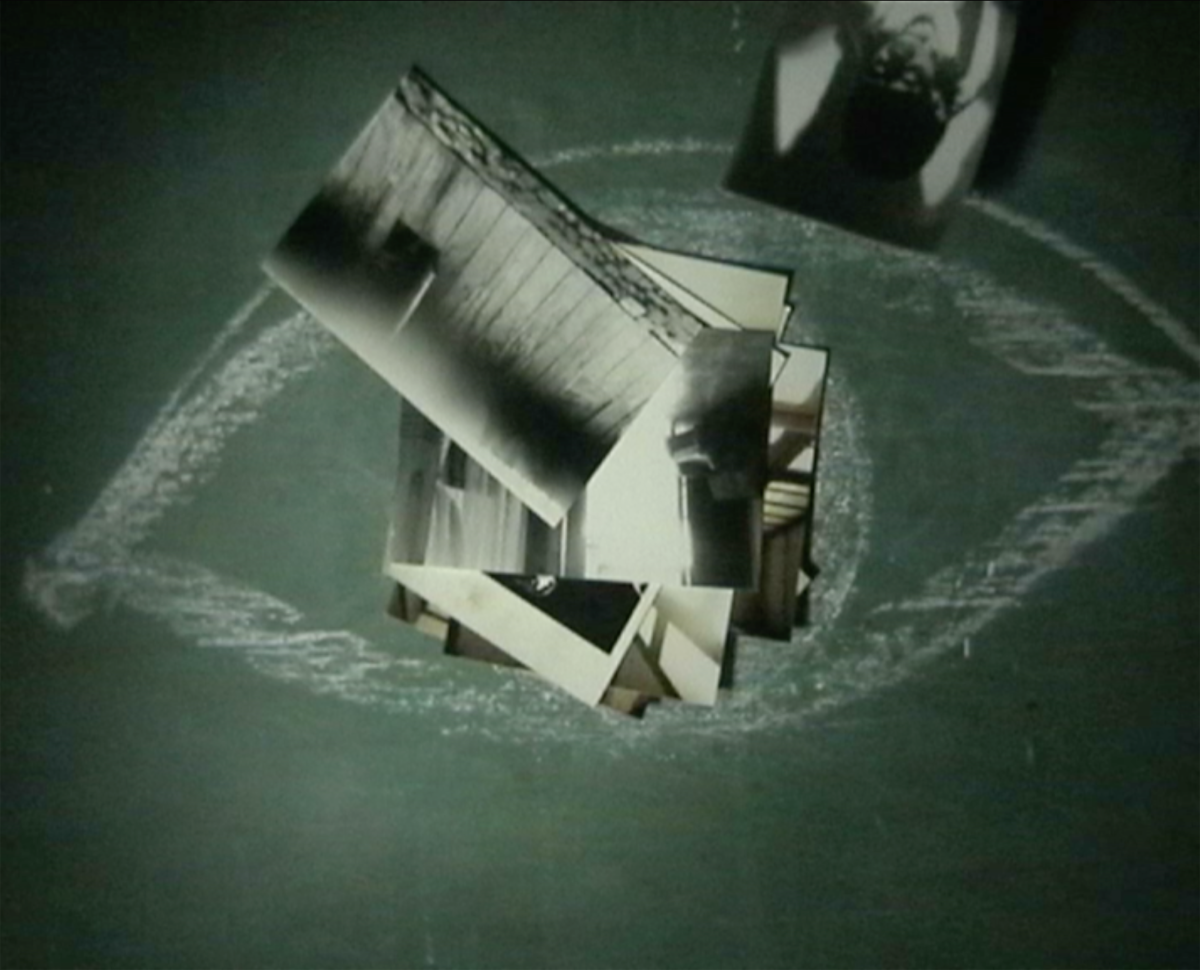
Ketok (2002)
Trauma resurfaces in the work Diaspora (Generasi Sekian) (2015). In 2014, rumours of riots during Indonesia’s presidential election stirred traumatic memories of the 1998 events. A Chinese-Indonesian family decided to temporarily flee their home in Jakarta to evade potential violence. Here, past trauma is not merely a memory held by those who experienced it; it reverberates across subsequent generations through interpretation, anxieties, and everyday tactical decisions.
Language is an element easily severed within diasporic communities. In Diaspora (Generasi Sekian), none of the children in the family speak Mandarin. This rupture indicates that identity is not an intact inheritance but rather a process of constant negotiation, selection, and adaptation. In this context, the body carries one part of history, while another part is neglected or abandoned. Such disconnection compels individuals to question their origins and their positions within a constantly shifting context.
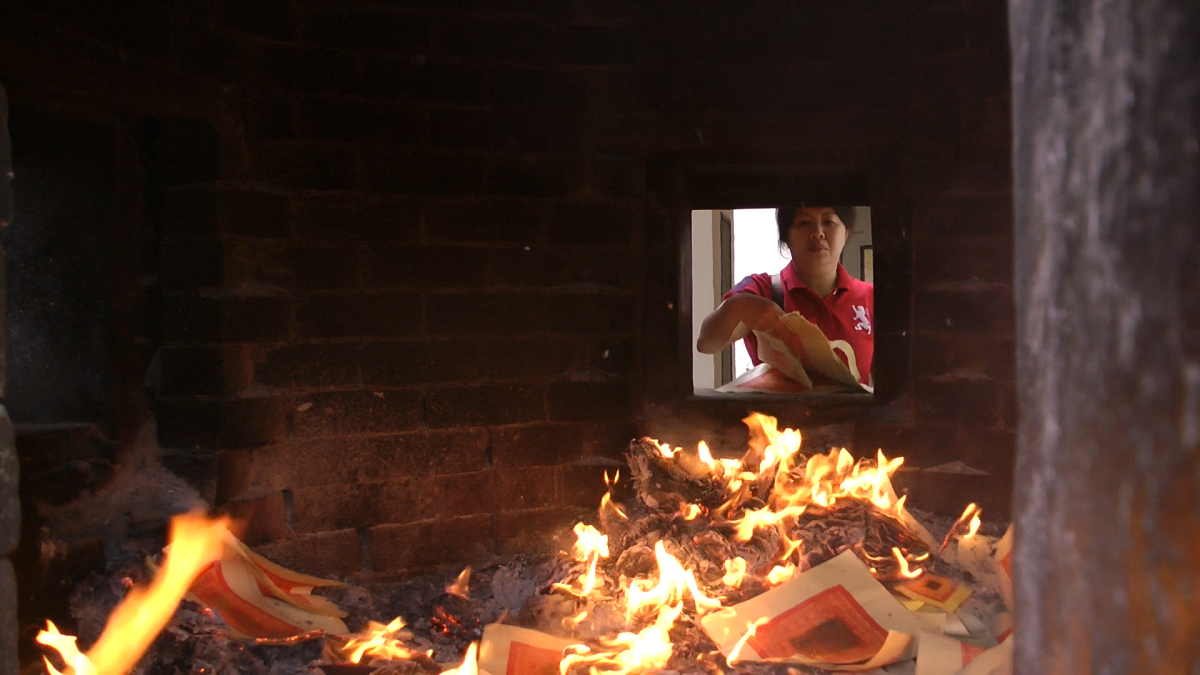
Diaspora (Generasi Sekian) (2015)
Questions of origin shift towards a more reflective, corporeal realm in the work, As I Imagine My Body Moving (2022). Born in Indonesia, raised in Singapore, and now based in Hong Kong, dancer and video artist Elysa Wendi navigates the dances and scars of past and present through improvisational editing and collage. Here, the body is not merely a repository of experience but an expansive space for imagination. Memory is recalled through movement, perception, and spatiality; the body becomes a fluid archive in the search for a living identity, revealing causal links between different times and spaces. Identity is not a fixed narrative but rather the result of continuous circulation between memory and perception.
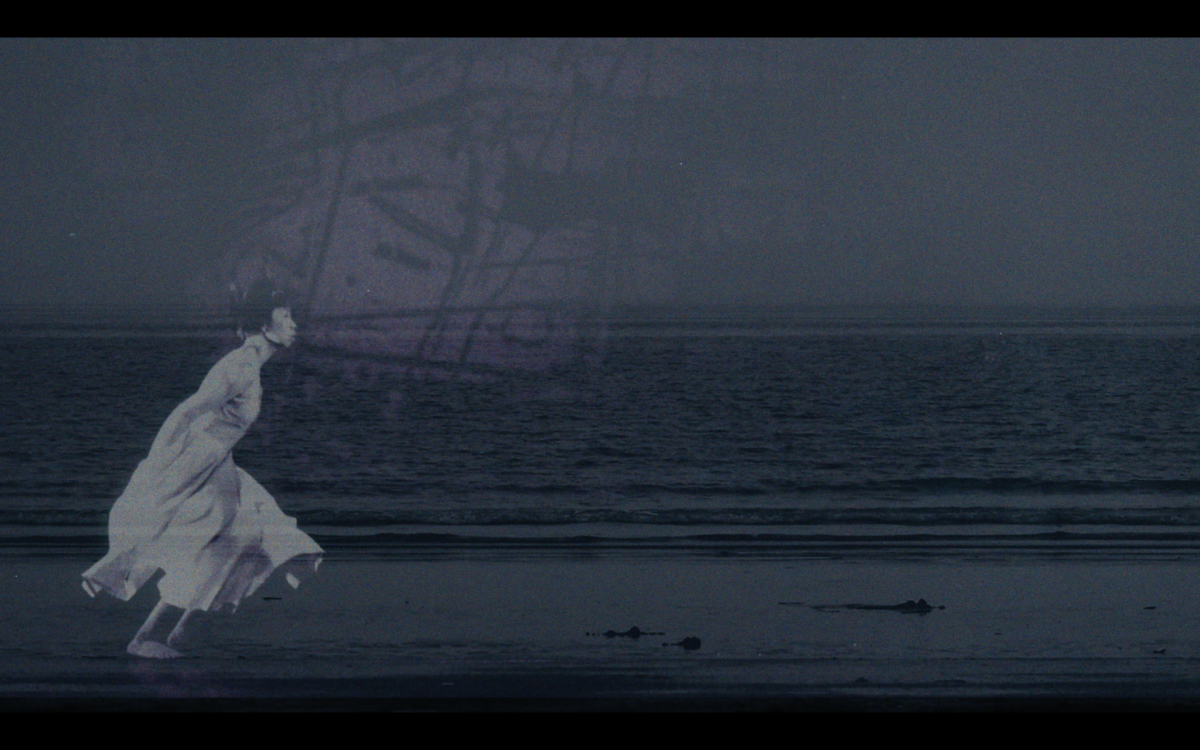
As I Imagine My Body Moving (2022)
In the work, I See พญานาค (Phaya Nāga) Elsewhere (2023), the quest for identity extends into the realm of mythological belief. Raised in Thailand and later relocated to Hong Kong, artist Weera-it Ittiteerarak reflects on his first solo return to Bangkok. Encountering a city that feels at once intimate and alien, he imagines an alternative life staying behind and uses AI technologies to generate a version of himself living in this parallel universe. An avid diver, he invokes the Naga—the serpentine river guardian—whose winding presence surfaces within his everyday experience in Hong Kong. This deity anchors Ittiteerarak's sense of belonging, nourished by early memories of Bangkok and the enduring heritage of his family culture.
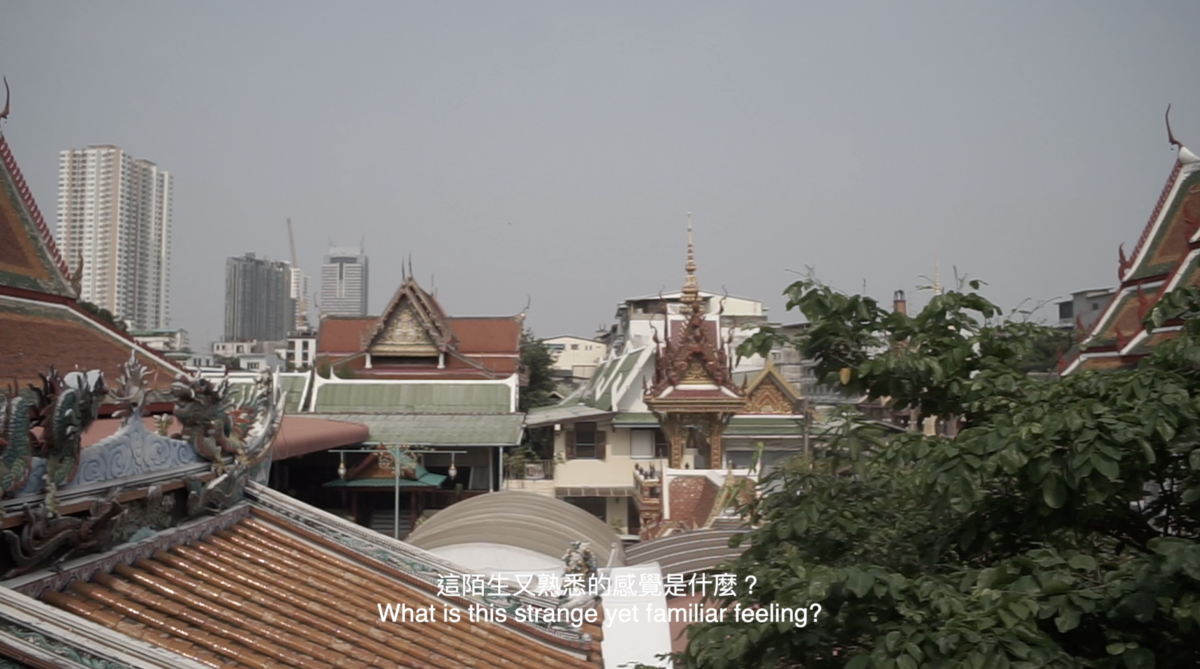
I See พญานาค (Phaya Nāga) Elsewhere (2023)
The screening concludes with O for Opium (2023), a work that expands the scope of regional exchange into a broader scale—namely the trade of commodities within global colonial networks. Opium is positioned not merely as a commodity, but as an entity designed to impact the economies and livelihoods of distant lands. By dissecting how identity is shaped through material control and how political economies are manipulated, artist Ho Tzu Nyen connects individuals to the region. He reveals opium as an external force of colonial power that permeates society, creating a paralysing dependency while blurring the boundary between personal desire and systemic control.
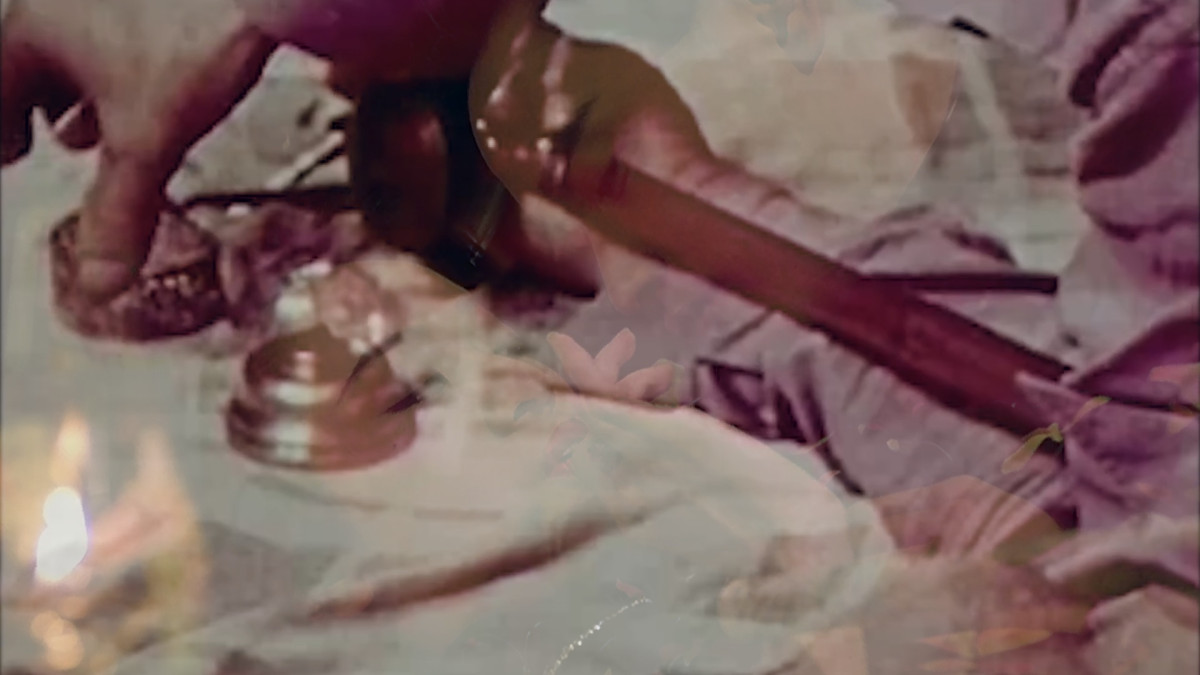
O for Opium (2023)
Through a variety of reflective and experimental moving-image practices, this selection of works illustrates how the descendants of the Dragon and the Naga navigate their transregional histories. They gather and connect the 'shimmering scales' that forge their sense of self — fragments composed of invisible fears, inherited trauma, and migratory memories, as well as ancient myths and the economic exchanges of different eras. Amid the interplay of light and shadow, and the voyage between the past and present, individual identity is continuously shaped and reconstructed in this perpetual flow.
Co-curated by| 
Supported by| 
The Hong Kong Arts Development Council supports freedom of artistic expression. The views and opinions expressed in this project do not represent the stand of the Council.