Educated at National Taiwan University and Temple University (MFA), Lee Daw-ming (b. 1953) is a Taiwanese filmmaker, scholar, and educator whose work spans documentary, fiction, animation, and television. His award-winning films bear witness to Taiwan’s ethnic communities and social transformations before and after martial law. A longtime advocate of documentary research and education, he received the TIDF Outstanding Contribution Award in 2022.
Beyond the Killing Fields: Refugees on the Thai-Cambodian Border
Beyond the Killing Fields: Refugees on the Thai-Cambodian Border




Beyond the Killing Fields: Refugees on the Thai-Cambodian Border
Synopsis
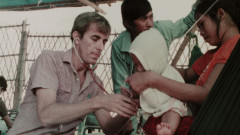
From 1980, tens of thousands of Cambodian and Vietnamese refugees fled war to makeshift camps along the Thai–Cambodian border. Filmed by Taiwan’s Kuangchi Program Service, this documentary captures the peril of foraging in minefields and the resilience of song and dance amid bombardment. The first privately funded Golden Horse Best Documentary, it reshaped Taiwanese documentary discourse.
Lee Daw-ming: ‘Beyond the Killing Fields: Refugees on the Thai-Cambodian Border opens with a military exercise organised by the resistance forces. When we heard it was going to happen, we knew we had to film it — after all, we couldn’t actually go into the battlefield. Military drills don’t wait for you. You have to follow them, film on the move, and capture everything in real time; no one is going to stop while you get the camera ready. Whenever the cinematographer Chen Sung-mao ran after them, I ran alongside him. We were like “conjoined twins”, because my sound had to stay in sync with his images. If he ran, I ran. Whatever he filmed, I had to record the sound; whatever I recorded, he had to have the image.Back then everything was very “hand-crafted”. We decided everything on the spot. There was no way to plan ahead or write a script about what we were going to film. The topic and overall direction were clear, of course, but we had no idea who would become our subject or what we would end up capturing. We just had to react as things happened.’
Festivals & Awards
1986 Best Documentary, Best Documentary Director, Golden Horse Awards
1986 Best Short Film Award, Asia Pacific Film Festival
Director's Profile
LEE Daw-ming
Filmography
1982 Oh Where, Oh Where Has My Little Dog Gone?
1982 In the Beginning
1983 Ayako and Joe
1984 Growing Up in the Promised Land
1984
1986 Beyond the Killing Fields: Refugees on the Thai-Cambodian Border
1988 The Suona Player
1988 Songs of Pasta'ay
1990 Beyond the Anti-DuPont Movement: Portraits of Some Social Activists
1991 Voice of the People
1993 The Austronesian Peoples of Taiwan
1994 Sakuliu
1994 《永遠的部落:雲豹民族的故鄉》
1995 《中國人的天文觀念與水運儀象臺》
1997 《小陶壺森林奇遇記》
1997 《尋根溯源話南島》
1997 《臺灣史前文化尋根之旅》
1997 Songs of the Mountain, Dances of the Ocean: Music and Dance of the Indigenous Peoples of Taiwan
1999 The Last Chieftain
1999 Tamsui River
2000 「人民的聲音」系列
2000 《臺灣原住民從那裡來?》
2001 Tsuenu, the Way
2001 《亞洲放逐:拿生命搏一個未來》
2002 Rebuilding the Kuba: Tufuya
2002 Rebuilding the Kuba: Tapangu
2002 《文化南島之旅:臺灣原住民的文化與藝術》
2003 Shattered Dreams

Credit
Editor/Sound|LEE Daw-ming
Cinematographer|CHEN Sung-mao
Executive Producer|Jerry MARTINSON
Production|Kuangchi Program Service
Print Source
TFAI|service@tfai.org.tw