
Mohanad Yaqubi is a filmmaker and producer, and a founding member of Idioms Film, the Ramallah-based production company. He is also a co-founder of Subversive Films, a research and curatorial collective dedicated to militant film practices, and a founding member of the Palestine Film Institute. Since 2017, he has been a resident researcher at the KASK School of Arts, Ghent, Belgium.
Off Frame aka Revolution Until Victory
Off Frame aka Revolution Until Victory
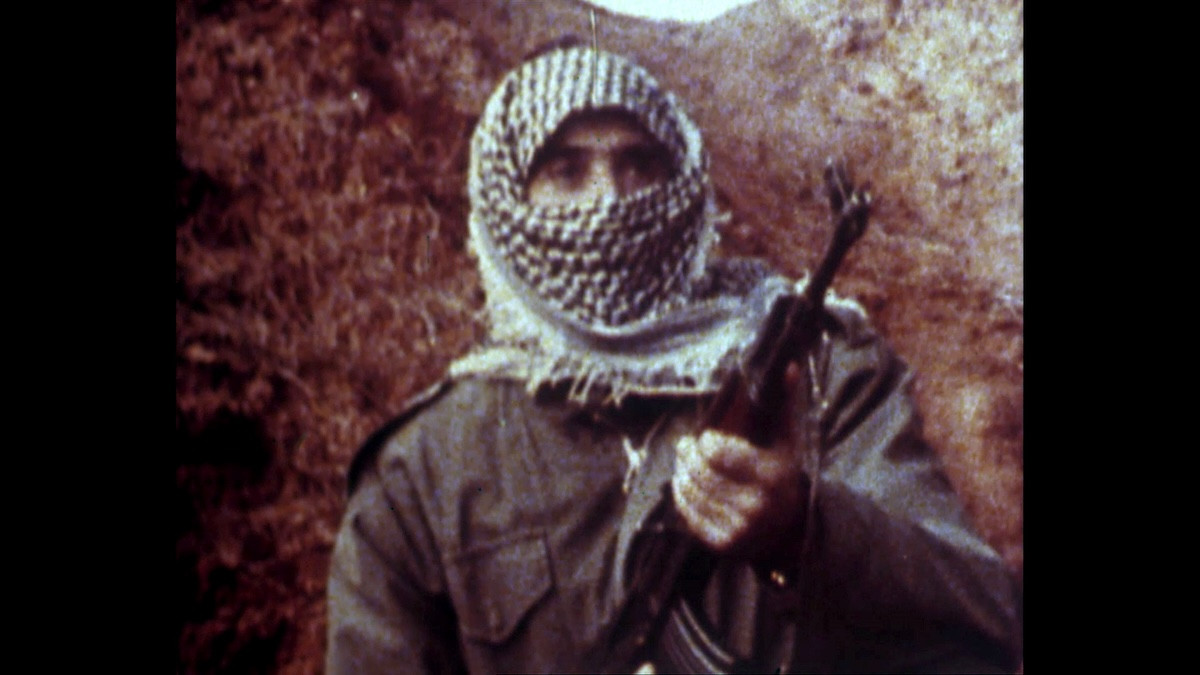


Off Frame aka Revolution Until Victory
Synopsis
A meditation on Palestinian self-representation through the Palestine Film Unit (PFU) of the 1960s–70s. Drawing on globally recovered archival footage, the film traces militant filmmakers reclaiming image and narrative through revolutionary cinema, reflecting on struggles revived on screen — and those that remain off frame.
Mohanad Yaqubi: ‘The more I had to explain the motivation and intention behind the research (of the archive), the more the film’s flow became clearer in my head. There were great opportunities for rewriting the film, based on interactions with international audiences, and I was greatly relieved when I realised that I did not have to make a conventional “militant film with a message”. It was crucial to foreground cinematic form and aesthetics, and thus stitch a narrative from the ‘archival’ images and sounds based on the PFU’s own film aesthetics rather than focus on their narrative. This is how I came to question, at the heart of my research, what is in the frame and what is outside it, what is off frame.Militant cinema still embodies a relevant alternative model of production that points to a fundamental question: why do we make films? In the case of Palestinians, 1948 was not only their year of [the] Nakba, but it was also the year when they started to become invisible to the eyes of the world. The world, or rather Israel and the West, went on behaving as if we did not exist. We were absent from public consciousness, media, and the press. From the outset, our struggle for survival would clearly be linked to our visibility, with being seen and recognised. To borrow the words of Palestinian writer and historian Elias Sanbar: “For people who suffer from invisibility, the camera would be their weapon.”’
Festivals & Awards
2016 Toronto IFF
2017 Berlinale
Director's Profile
Mohanad YAQUBI
Filmography
2016 Off Frame aka Revolution Until Victory
2022 R21 aka Restoring Solidarity

Credit
Producer|Sami SAID, Mohanad YAQUBI
Coproducer|Delphine LANDES
Scriptwriter|Reem SHILLEH, Mohanad YAQUBI
Cinematographer|Sami SAID, Rami NIHAWI, Sara SEA
Sound Design/Sound Mix|Cari SVENSSON
Sound Editor|Petru SIPOS
Print Source
Noor YAHYA|info@idiomsfilm.com