
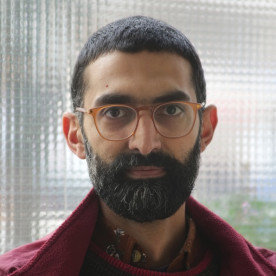
Faraz Fesharaki (b. 1986, Isfahan) is an Iranian-German filmmaker and award-winning cinematographer based in Berlin. While studying at Tehran University of Art, he made early shorts and attended workshops with Abbas Kiarostami. A graduate of the German Film and Television Academy Berlin, he shot What Do We See When We Look at the Sky? (FIPRESCI Prize, Berlinale 2021). What Did You Dream Last Night, Parajanov? is his debut feature as director.
What Did You Dream Last Night, Parajanov?
What Did You Dream Last Night, Parajanov?


What Did You Dream Last Night, Parajanov?
Synopsis
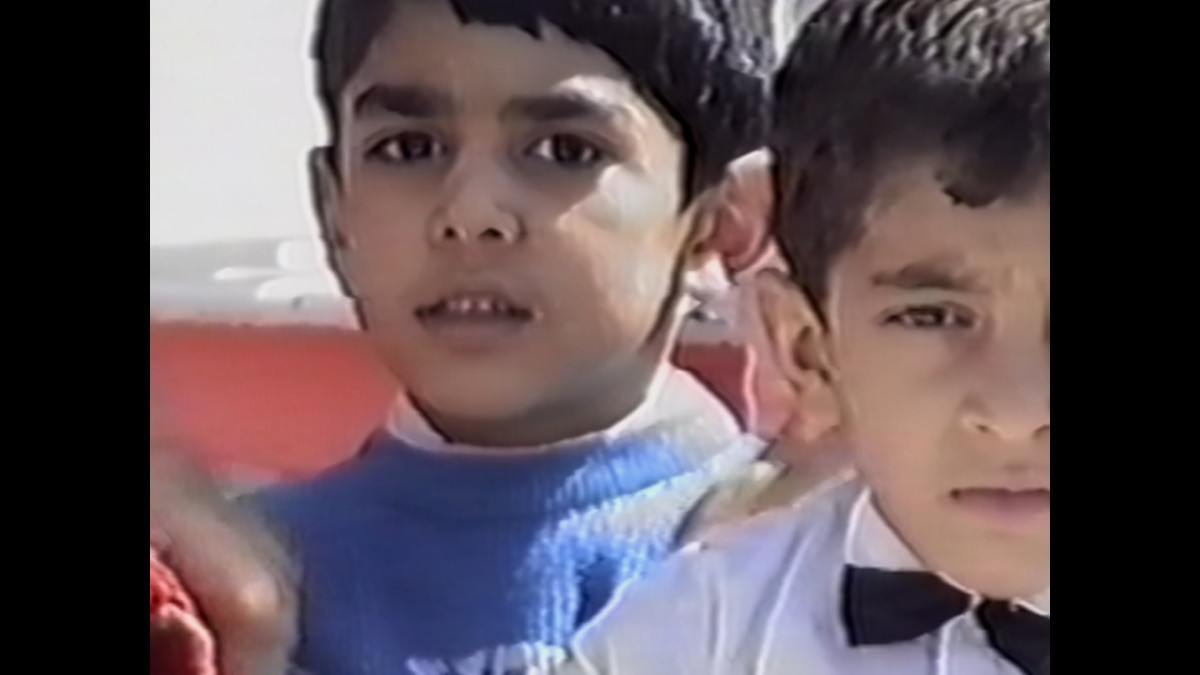
The webcam witnesses it all. Living in Berlin, the director records ten years of drifting online conversations with parents in Isfahan and a cousin in Vienna. Much remains unsaid. Text fragments and VHS images evoke longing, distance and the ache of wanting to be understood.
Faraz Fesharaki: ‘My mother wanted to know why I was recording our Skype conversations. I told her these recordings were like my diaries. [In writing,] I would never have been able to capture the essence of those moments with such detail and fidelity.
“The camera doesn’t lie,” Abbas Kiarostami used to say in his workshop. “One can trust the camera.” That’s why I recorded those moments. Now, after finishing the film, I am no longer sure I can truly “trust the camera”. Every day in the editing room, I could create a different family. At times, my father was the kindest person a child could wish for; at others, the devil on earth. Sometimes I was the most humorous son, entertaining my parents endlessly; at other moments I was absent. And my mother? She remained constant — loving, deeply empathetic, intelligent and, above all, fierce. How could a camera that does not lie allow me to leave the editing room every day with a new version of our family? That remains a mystery to me.
I never intended to make a faithful documentary about the Fesharaki family. What interested me most were the small narratives that emerge when people love each other. Perhaps through this film, viewers may glimpse a family and understand how the beloved revolution of my parents’ generation was stolen from them, and how the brutal oppression that followed ruined not only their lives but also those of their children. Yet there is one thing that keeps us all together: hope.’
Festivals & Awards
2024 Berlinale
2025 Ogawa Shinsuke Prize, New Asian Currents Awards, Yamagata IDFF
Director's Profile
Faraz FESHARAKI
Filmography
2017 It’s a Criminal Waste to Give This Film a Postproduction
2024 《帕拉贊諾夫,你昨晚夢見什麼》What Did You Dream Last Night, Parajanov?
Credit
Producer|Luise HAUSCHILD, Ewelina ROSINSKA, Mariam SHATBERASHVILI
Scriptwriter/Editor|Faraz FESHARAKI
Cinematographer|Moritz FRIESE, Shahab FOTOUHI, Faraz FESHARAKI
Sound Designer|Sum-Sum SHEN
Sound Mix|Jan PASEMANN
Print Source
Oyster Films|oyster.films.info@gmail.com