
Hu Tai-li (1950-2022) was a pioneering Taiwanese visual ethnographer, anthropologist, filmmaker, writer, and curator. A Distinguished Research Fellow and former Director at Academia Sinica’s Institute of Ethnology, she founded the Taiwan International Ethnographic Film Festival (TIEFF). Her award-winning documentaries employ multisensory strategies to interrogate ethnographic traditions and power relations, examining ethnic identities and the gendered lived experiences of rural, veteran, and Indigenous communities amid social change.
Songs of Pasta’ay
Songs of Pasta’ay






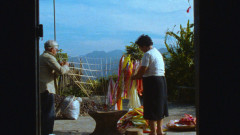


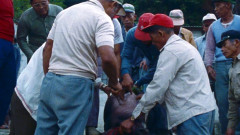
Songs of Pasta’ay
Synopsis
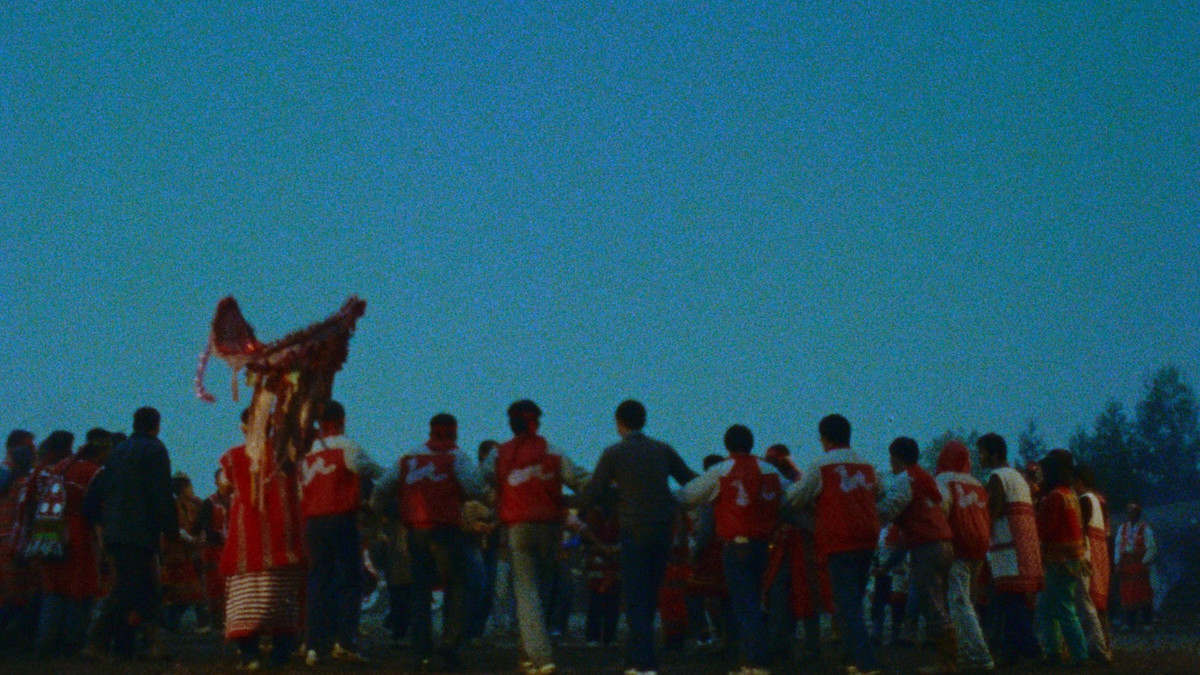
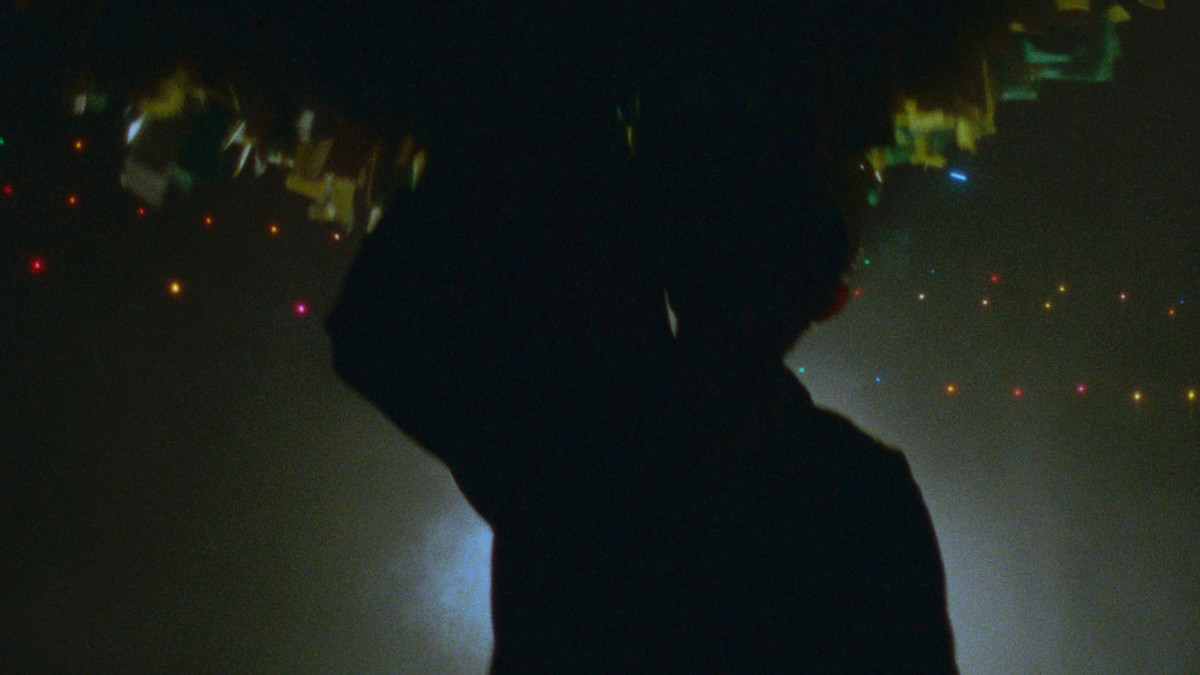
Centred on the SaySiyat people’s paSta'ay ritual, this ethnographic documentary records the 1986 Great Ritual in Wufeng, Hsinchu, held once every ten years. Structured around fifteen ritual songs, it explores belief in legendary beings, generational reflection, ambivalence toward tourism, and tensions between tradition and modernisation.
Hu Tai-li: ‘The full significance of the paSta'ay remains elusive; my work is only an initial exploration. My interpretations may evolve with further research. I sought to capture the SaySiyat people’s emotions and gestures on screen, leaving ample space for both the audience’s imagination and my own.’— Excerpted and translated from Hu Tai-li, ‘The Projection of Ethnographic Films: With a Discussion of Image Experiments in Taiwan’, Bulletin of the Institute of Ethnology, Academia Sinica, Vol. 71, 1991.
Lee Daw-ming: ‘Actually, before filming Songs of Pasta’ay, I didn’t know much about Taiwan’s Indigenous cultures. I did my homework for this project, but after all Professor Hu Tai-li was the anthropologist. I took part in the discussions, though the structure of the film was largely shaped by her. In the film she asks many questions that sound quite “stupid”. Sometimes she genuinely didn’t know; at other times it was deliberate, because one method in anthropology is to “pretend to know nothing”. By asking seemingly foolish questions, one can check whether one’s understanding truly matches that of the interviewees. Professor Hu researched the paSta'ay songs as we were filming, gradually analysing why the lyrics are repeated in this particular way. Through this “anthropological thesis”, she reinterpreted the paSta'ay songs of the SaySiyat people.’
Festivals & Awards
1989 Margaret Mead Film Festival 1990 RAI Film Festival
Director's Profile
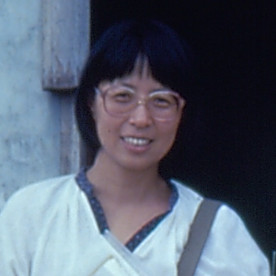
HU Tai-li
Filmography
1984 The Return of Gods and Ancestors: Paiwan Five Year Ceremony
1988 Songs of Pasta'ay
1993 Voices of Orchid Island
1997 Passing Through My Mother-in-law's Village
2000 Sounds of Love and Sorrow
2003 Encountering Jean Rouch
2004 Stone Dream
2006 After Passing
2012 Returning Souls
2020 Dear Masks
Director's Profile
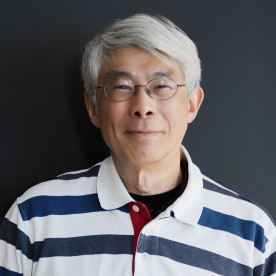
LEE Daw-ming
Educated at National Taiwan University and Temple University (MFA), Lee Daw-ming (b. 1953) is a Taiwanese filmmaker, scholar, and educator whose work spans documentary, fiction, animation, and television. His award-winning films bear witness to Taiwan’s ethnic communities and social transformations before and after martial law. A longtime advocate of documentary research and education, he received the TIDF Outstanding Contribution Award in 2022.
Filmography
1982 Oh Where, Oh Where Has My Little Dog Gone?
1982 In the Beginning
1983 Ayako and Joe
1984 Growing Up in the Promised Land
1984
1986 Beyond the Killing Fields: Refugees on the Thai-Cambodian Border
1988 The Suona Player
1988 Songs of Pasta'ay
1990 Beyond the Anti-DuPont Movement: Portraits of Some Social Activists
1991 Voice of the People
1993 The Austronesian Peoples of Taiwan
1994 Sakuliu
1994 《永遠的部落:雲豹民族的故鄉》
1995 《中國人的天文觀念與水運儀象臺》
1997 《小陶壺森林奇遇記》
1997 《尋根溯源話南島》
1997 《臺灣史前文化尋根之旅》
1997 Songs of the Mountain, Dances of the Ocean: Music and Dance of the Indigenous Peoples of Taiwan
1999 The Last Chieftain
1999 Tamsui River
2000 「人民的聲音」系列
2000 《臺灣原住民從那裡來?》
2001 Tsuenu, the Way
2001 《亞洲放逐:拿生命搏一個未來》
2002 Rebuilding the Kuba: Tufuya
2002 Rebuilding the Kuba: Tapangu
2002 《文化南島之旅:臺灣原住民的文化與藝術》
2003 Shattered Dreams
Credit
Cinematographer|CHANG Chao-tang
Soundpersons|LEE Daw-ming, JIANG Guan-ming
Editor|LEE Daw-ming
Mixing Engineer|TU Duu-chih
Print Source
TFAI|service@tfai.org.tw