
Mohanad Yaqubi is a filmmaker and producer, and a founding member of Idioms Film, the Ramallah-based production company. He is also a co-founder of Subversive Films, a research and curatorial collective dedicated to militant film practices, and a founding member of the Palestine Film Institute. Since 2017, he has been a resident researcher at the KASK School of Arts, Ghent, Belgium.
R21 aka Restoring Solidarity
R21 aka Restoring Solidarity


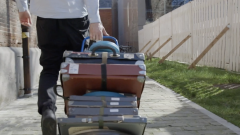
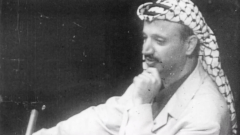


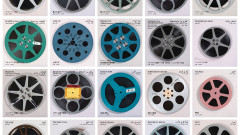

R21 aka Restoring Solidarity
Synopsis
R21 aka Restoring Solidarity reflects on twenty Palestinian 16mm films safeguarded in Japan through solidarity movements of the 1960s–80s. Framed by an undelivered letter from a Japanese activist to a Palestinian filmmaker, the film functions as a catalogue, archive and time machine, restoring memories of global solidarity, shared aspirations, struggle and a disappearing generation.
Mohanad Yaqubi: ‘The word “archive” [usually refers to a] building that holds documents, and according to Achille Mbembe, this “archive” status and power [are] derived from this entanglement of building and documents. In the Palestinian case, the building of an archive does not exist, since the land of Palestine is under occupation, and the documents of the Palestinians are scattered all around the globe. So, when we say that this film is an archive, we suggest its narrative structure as a “building” that holds a collection of films, of documents. From this perspective, the film serves as an inventory of the 20 reels, one where all the filmographic information can be found in the credits, and where the archive’s visitors are invited to observe the reoccurring cinematic and political patterns held within. The film’s chronological order invites independent readings by the viewer, while the narration helps to explore the motives of the Palestine solidarity group. The film is a homage to the Japanese solidarity group that collected and screened these films around Japan, in classes, in political settings, touring cinemas, and community centres. It is also a thank you letter, from Palestinian filmmakers to their Japanese counterparts, for keeping these films safe, and for telling a story of people’s struggle imprinted not only on celluloid, but on the consciousness of a generation.’
Festivals & Awards
2022 IDFA
Director's Profile
Mohanad YAQUBI
Filmography
2016 Off Frame aka Revolution Until Victory
2022 R21 aka Restoring Solidarity

Credit
Producer|Sami SAID, Mohanad YAQUBI
Scriptwriter|Rami EL NIHAWI, Mohanad YAQUBI, Lisa SPILLIAERT
Editor|Rami EL NIHAWI
Cinematographer|Casey ASPROOTH-JACKSON
Sound Design|Raf ENCKELS
Narration|Lisa SPILLIAERT
Print Source
Butch ROZNEV|distribution@escautville.org