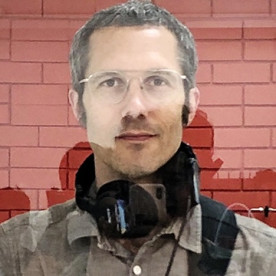
Ernst Karel is a sound artist working across experimental nonfiction, multichannel installation, performance, electroacoustic music, and postproduction sound for nonfiction vilm (video and/or film). His practice focuses on location recording and composing with unprocessed sound, often moving between abstraction and documentary. He has collaborated extensively with the Sensory Ethnography Lab at Harvard and has presented work at major film and art institutions worldwide.
Expedition Content
Expedition Content


Expedition Content
Synopsis
An immersive work of sonic ethnography, Expedition Content draws on audio recordings made in 1961, by Standard Oil heir Michael Rockefeller, during the Harvard–Peabody Expedition to Netherlands New Guinea. Nearly imageless, the film examines the encounter with the Hubula (also known as Dani) people, unsettling the power relations between sound and image, anthropologist and subject.
Veronika Kusumaryati: 'Dead Birds is a landmark ethnographic film; it is very controversial, not only in terms of its position within the canon of visual anthropology, but also in the history of the representation of the Papuan people with whom I work as an anthropologist. We are very critical of Dead Birds, precisely because of its emphasis on the fetish of the visual that is based on the representation of black bodies, [particularly] male black bodies, and how the Papuans are muted. So the way we composed Expedition Content, we attempt to challenge Dead Birds by meaningfully engaging with and being in conversation with it. For instance, in the archive, we found so many recordings of women: women who speak, women who laugh, women who work. So, for expressivity, we want to put women's voices in there, in the recording.’
Ernst Karel: 'The cinema [...] is a wonderful space for listening. [It's] like a built-in multi-channel listening environment. Whereas in the field of electroacoustic music, and other kinds of more sound-centric situations, venues are really not to be found. Basically people set up loudspeakers for concerts, it's not like there's usually a setup place where you go. [B]ut cinemas do exist, so we kind of imagined [the film] from the beginning as a sound piece for cinema, and even before there was any visual element at all. I'm not claiming any originality in that idea. [T]here's one essay that we sometimes read in my class: "Four and a Half Film Fallacies" by Rick Altman. I think it's the ontological fallacy, as he describes it, which is the idea that image without sound we take as cinema, but [...] sound without image, for some reason, wouldn't qualify as cinema. He's arguing with a lot of old historical examples that there hasn't always been image combined with sound.’
— Excerpted from Open City Docs Fest 2020 Focus: Listening Against A Colonial Present, 'An Interview with Expedition Content's Ernst Karel and Veronika Kusumaryati’
Festivals & Awards
2020 Berlinale
2020 Cinéma du Réel
Director's Profile
Ernst KAREL
Filmography
2014 Single Stream
2015 Ah Humanity!
2020 Expedition Content
Director's Profile
Veronika KUSUMARYATI
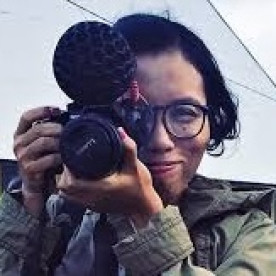
Veronika Kusumaryati is a political and media anthropologist working in West Papua, a self-identifying term referring to Indonesia’s Papua and West Papua provinces. She holds a PhD in Anthropology from Harvard University, with a secondary field in Film and Visual Studies. An affiliate of the Sensory Ethnography Laboratory, she is currently Assistant Professor of Anthropology at the University of Wisconsin–Madison.
Filmography
2006 Death in Jakarta
2013 Iqra
2020 Expedition Content
Credit
Composer|Ernst KAREL, Veronika KUSUMARYATI
Sound Recordist|Michael C. ROCKEFELLER