
1980年代後期,台灣社會風起雲湧,也是電影媒材從膠卷轉向磁帶的過渡期。留美歸國的李道明帶回觀念、技術與設備,抱持著影像保存的意識,選擇以16mm膠卷拍攝,為時代留下珍貴紀錄。適逢影視聽中心完成李道明、胡台麗共四部作品的數位修復,本單元呈現銘刻其中的時代印記,並進一步反思「記錄」行動之於「紀錄」保存的意義。

代表圖片

Voice of the People

After martial law was lifted, decades of industrial pollution ignited social movements across Taiwan. Re-editing material suppressed from broadcast, Lee Daw-ming documents four landmark struggles — from the Hualien pulp mill and Houjin’s fifth naphtha cracker to Tainan pig-farm pollution and the anti-Fourth Nuclear Power Plant campaign — capturing collective resistance and enduring human values of the late 1980s.

Beyond the Anti-DuPont Movement: Portraits of Some Social Activists

Following the lifting of martial law in 1987, Taiwan entered democratisation as grassroots movements flourished. Proposed by director Lee Daw-ming and funded     by the Public Television Service, the film interviews key figures shaped by the Lukang Anti-DuPont Movement. Intended for broadcast, the film was suppressed by authorities and finally screened at the 2002 Taiwan International Documentary Festival.

Songs of Pasta’ay

Centred on the SaySiyat people’s paSta'ay ritual, this ethnographic documentary records the 1986 Great Ritual in Wufeng, Hsinchu, held once every ten years. Structured around fifteen ritual songs, it explores belief in legendary beings, generational reflection, ambivalence toward tourism, and tensions between tradition and modernisation.

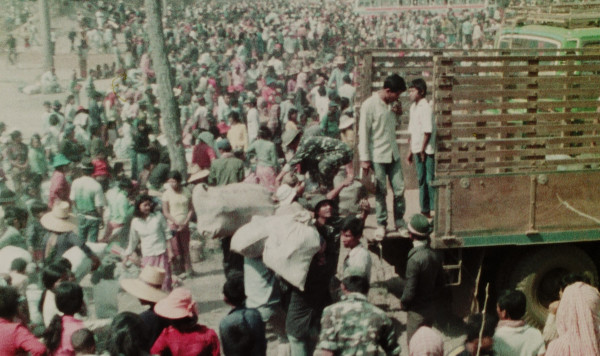
Beyond the Killing Fields: Refugees on the Thai-Cambodian Border

From 1980, tens of thousands of Cambodian and Vietnamese refugees fled war to makeshift camps along the Thai–Cambodian border. Filmed by Taiwan’s Kuangchi Program Service, this documentary captures the peril of foraging in minefields and the resilience of song and dance amid bombardment. The first privately funded Golden Horse Best Documentary, it reshaped Taiwanese documentary discourse.

Reel Taiwan| The Late 1980s on Film

In the late 1980s, Taiwan underwent social upheaval, coinciding with the transition of the cinematic medium from celluloid to videotape. Returning from the United States, Lee Daw-ming brought back new ideas, techniques and equipment. Out of a commitment to preservation, he chose to shoot on 16mm film, capturing an invaluable record of the era. With the Taiwan Film and Audiovisual Institute completing digital restorations of four works by Lee Daw-ming and Hu Tai-li, this programme revisits the imprints of those times, while reflecting on the relationship between the act of recording and the preservation of records.

Films

Beyond the Anti-DuPont Movement: Portraits of Some Social Activists

Beyond the Anti-DuPont Movement: Portraits of Some Social Activists
1990
Taiwan
54min

Beyond the Killing Fields: Refugees on the Thai-Cambodian Border

Beyond the Killing Fields: Refugees on the Thai-Cambodian Border

1986
Taiwan
56min

Songs of Pasta’ay

Songs of Pasta’ay

1988
Taiwan
60min

Voice of the People

Voice of the People

1991
Taiwan
66min
Subscribe to RSS - 時光台灣|印刻在膠卷上的1980年代後期